Green Cities of Tomorrow: India 2050
- Monika Tawale

- Aug 30, 2025
- 6 min read

“It’s been a while since I last wrote something here. Life kept moving fast, but a recent moment pulled me back to my diary of Earth.
The other day, I was walking through my city. The roads were buzzing with traffic, the air felt heavy, and the trees seemed fewer than before. Then, I noticed a small patch of green — a community garden tucked between tall buildings. Children were laughing, people were planting herbs, and suddenly, the whole space felt alive.
That contrast — between concrete and green, chaos and calm — made me wonder: what will our cities look like in the future?
Will we continue building endless concrete jungles, or can we reimagine Indian cities as sustainable, smart, and truly green by 2050?
That thought inspired me to return here and write about Green Cities of Tomorrow: India 2050.”

India is at a turning point. By 2050, nearly 50% of Indians will live in cities (compared to 35% today). This urban shift brings opportunities and risks. If we continue with today’s unplanned growth, cities could collapse under pollution, water shortage, and waste mountains. But if we act smartly, we can create sustainable urban ecosystems—cities that work with nature, not against it.
India’s Smart Cities Mission (2015) was the first step toward this vision. Let’s explore how future Indian cities could evolve, with real examples we already see today.
A Day in Mumbai 2050 – A Vision for a Green City
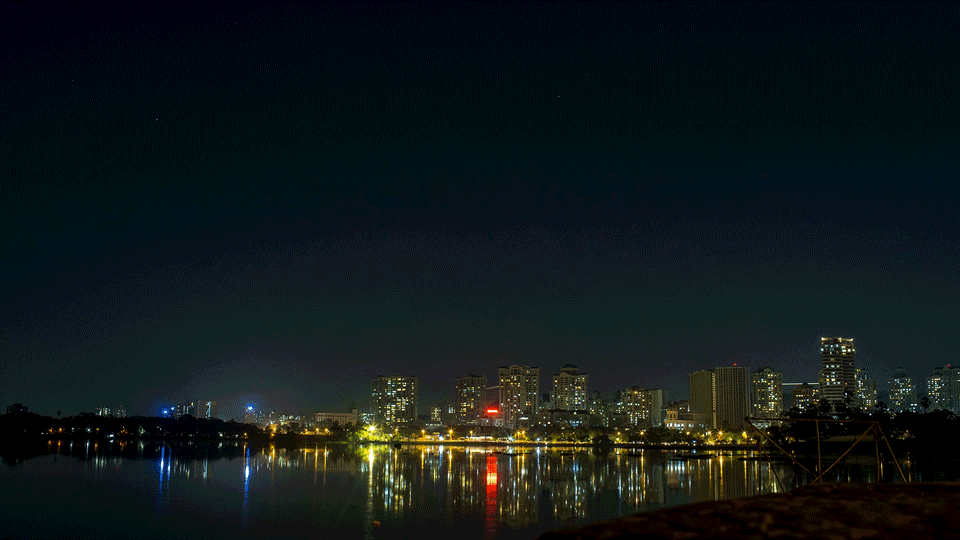
Close your eyes and imagine waking up in Mumbai in the year 2050. The city no longer runs on noisy diesel generators or polluting power plants — your own apartment generates clean solar energy, stored in smart batteries that power every appliance.
Breakfast doesn’t come from faraway supply chains but from your rooftop hydroponic farm, where fresh vegetables and herbs grow in vertical layers, watered and nourished using recycled greywater. Food is hyper-local, organic, and sustainable.
When it’s time to head to work, you step out into tree-lined streets where the air feels fresh. Silent, electric community shuttles wait at every corner, gliding smoothly through the city. There are no traffic jams anymore — AI-powered traffic systems predict congestion and redirect flows before bottlenecks even form.
As you pass the Mithi River, you see clear water shimmering under the sun. The stench of pollution is a distant memory. The banks have been transformed into green spaces, with cycling tracks, walking trails, and urban wetlands that support biodiversity. Families picnic by the river; children cycle safely without worrying about smog.
At school, children breathe clean air — without masks. Parks are everywhere, with rainwater harvesting ponds, native trees, and birds that had once disappeared but have now returned. Mumbai has grown not into a “bigger” city, but a betterone — resilient, green, and human-friendly.
This vision might feel like science fiction today, but it is entirely possible if we commit to building sustainable cities now. The choices we make in energy, transport, waste, and community living will decide whether Mumbai 2050 is just a dream — or a living reality.
1-Features of a Truly Sustainable Indian City
1. 100% Clean & Decentralized Energy
Future Vision (2050):
Every rooftop produces solar power.
Neighborhoods share community solar grids + battery storage.
Wind + tidal energy on coastal cities.
Net-zero skyscrapers → buildings produce as much energy as they consume.
Current Examples:
Diu (Gujarat) → India’s first city to run on 100% renewable solar power during the day.
Indore & Bhopal Smart Cities → installing rooftop solar across government buildings.
Kerala’s Cochin International Airport → world’s first fully solar-powered airport.

2. Green & Smart Mobility
Future Vision (2050):
Entirely electric public transport—buses, metros, and cabs.
Bicycle superhighways + walkable green zones.
AI traffic control to eliminate jams.
High-speed rail (like Japan) linking Indian megacities.
Current Examples:
Pune Smart City → India’s first electric bus fleet for public transport.
Nagpur → first city to launch India’s largest fleet of EVs for public use.
Delhi Metro → one of the world’s cleanest mass transport systems, powered partly by solar.
3. Water-Smart Urban Living
Future Vision (2050):
Every building has rainwater harvesting + greywater recycling.
AI-powered water grids manage supply efficiently.
Large-scale desalination plants along coastlines.
Current Examples:
Chennai Smart City → made rainwater harvesting mandatory (after 2019 water crisis).
Surat → advanced sewage treatment plants recycle wastewater for industries.
Bengaluru startups → water ATMs & smart meters to reduce wastage.
4. Zero Waste & Circular Economy
Future Vision (2050):
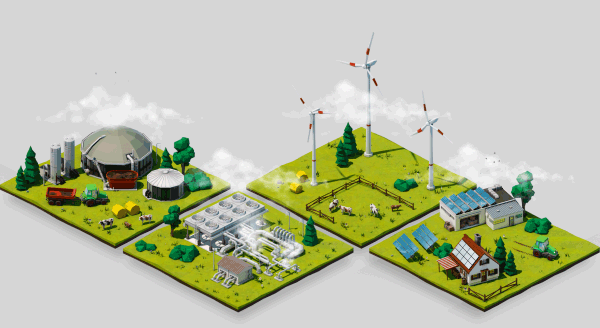
No landfills. Waste is turned into energy, compost, or raw materials.
Homes have AI-powered waste segregation systems.
Plastic banned → fully replaced by biodegradable or reusable alternatives.
Current Examples:
Indore Smart City → ranked India’s cleanest city 7 years in a row due to door-to-door segregation & composting.
Panaji (Goa) → decentralized waste treatment → every ward handles its own waste.
Ambikapur (Chhattisgarh) → women-led “garbage cafes” where waste earns food.
5. Green Buildings & Vertical Forests
Future Vision (2050):
Towers covered with trees & plants (vertical forests).
Natural cooling → reduces AC demand by 70%.
Cities designed for climate resilience.
Current Examples:
Hyderabad Smart City → large push for green buildings under GRIHA certification.
Bengaluru → Infosys & Wipro campuses are energy-efficient green campuses.
Delhi NCR → Supernova Spira tower integrates green tech.

6. Urban Food Security (Farming in the City)
Future Vision (2050):
Rooftops, balconies, and even skyscrapers grow food.
AI-powered hydroponic & vertical farms produce vegetables in city centers.
Urban farms cut transport emissions.
Current Examples:
Hyderabad & Bengaluru → large-scale terrace farming initiatives.
Mumbai → startups promoting hydroponic kits for urban households.
Kerala → state-supported rooftop vegetable farming programs.
7. AI & Smart Governance
Future Vision (2050):
AI monitors air quality, traffic, energy, water, and adjusts systems instantly.
Blockchain ensures transparent carbon credits and citizen participation.
Drones & IoT sensors track illegal dumping, construction, and pollution.
Current Examples:
Bhopal Smart City Command Center → real-time monitoring of traffic, waste, and emergency services.
Varanasi Smart City → AI-based surveillance for safety + city management.
Indore → GIS mapping + drone monitoring for waste management.
Case Study: Indore – India’s Model Green Smart City
Indore has emerged as India’s shining example of what a green smart city can look like when vision, technology, and community come together. The transformation started with a simple but powerful idea: waste is not garbage, it’s a resource. Today, Indore practices 100% waste segregation at source, meaning every household and shop separates wet and dry waste before collection. Instead of dumping waste into overflowing landfills, the city converts it into compost and biogas, fueling energy needs while keeping the environment clean. Rooftops across Indore now host solar panels, quietly generating renewable power and reducing dependency on coal-based electricity. The city also relies on digital monitoring systems for water supply and waste management, ensuring efficiency and accountability. But perhaps the most remarkable part of Indore’s success is the active role of its citizens. Cleanliness is no longer just a government initiative here — it has become a shared culture and daily habit. From schools to housing societies, people take pride in keeping their surroundings clean. This unique blend of technology, policy, and community spirit has made Indore not only India’s cleanest city for several years in a row but also a living blueprint of how urban India can transform into sustainable, future-ready green cities.

The Green City of 2050 – From Vision to Action
The “Green City of 2050” is not a faraway dream — it is a blueprint waiting to be built, brick by brick, policy by policy, and habit by habit. India is at a critical crossroads: by 2050, nearly half a billion people will live in its urban centers. This rapid urbanization could either turn our cities into chaotic, polluted megacity disasters — or transform them into sustainable urban miracles that the world looks up to.
The choice is ours. If we build smarter now — embracing renewable energy, AI-driven transport, waste-to-resource systems, green buildings, and above all, citizen participation — then the future Indian city will not just be livable, but truly thriving. But if we ignore the warnings, the price will be steep: unbreathable air, unliveable heat, water scarcity, and widening inequalities.
The good news is that cities like Indore, Pune, and Surat are already showing us the way. The solutions exist. What we need is collective willpower — from governments, businesses, and citizens alike.
2050 is closer than it seems. Every action we take today — segregating waste, conserving water, choosing public transport, supporting sustainable companies — is a step toward building that green city of tomorrow.

The question is not whether we can build a sustainable future. It’s whether we will.


Comments